UAE Real Estate Market Report Q2 2026: Prices, Rent Trends & Buyer Guide
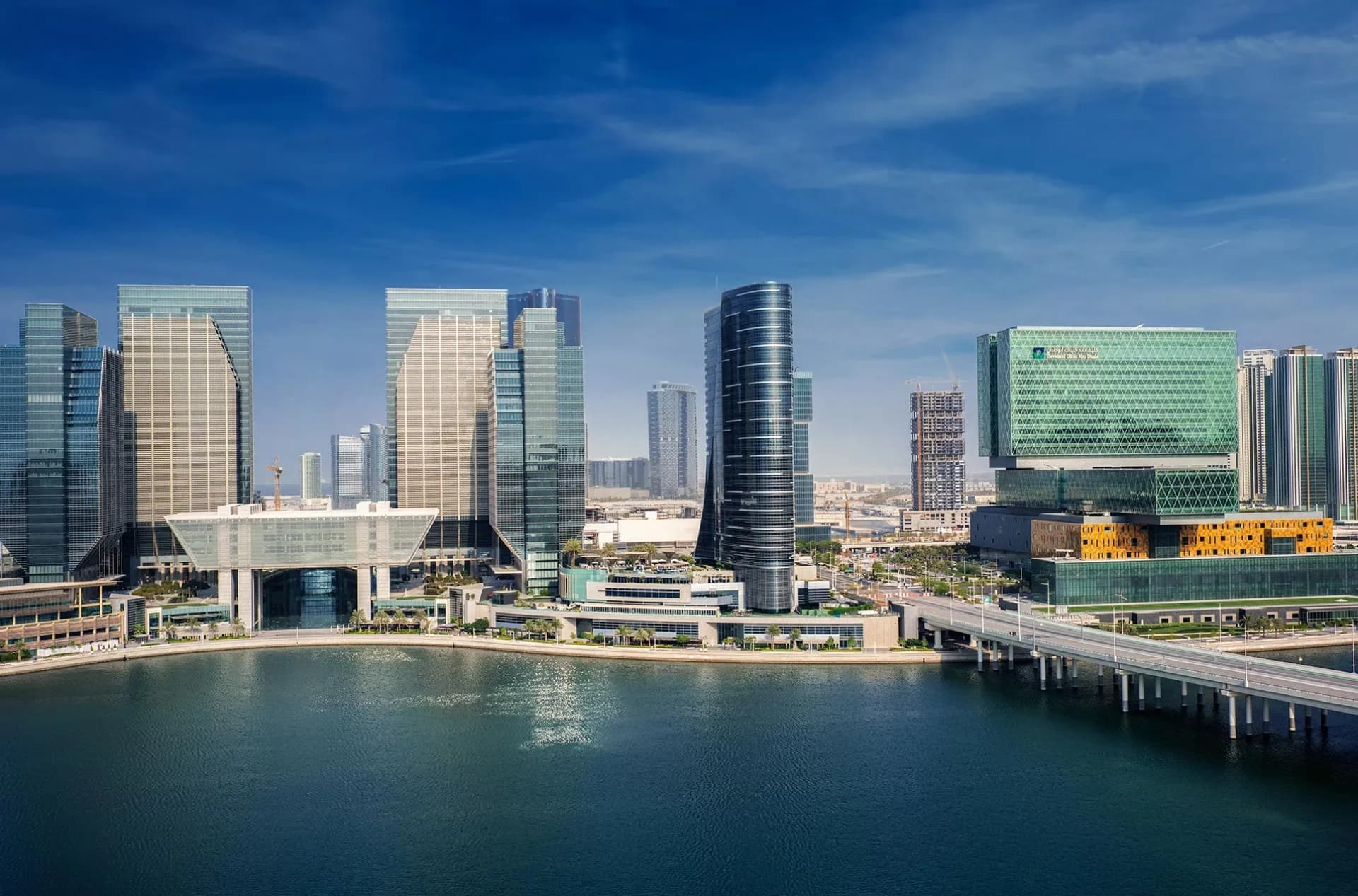
Q2 2026 was the quarter the UAE property market stopped moving in one direction. For three years, Dubai and Abu Dhabi rose together. This quarter they separated — sharply. Dubai's transaction value fell 43% year-on-year and residential rents dropped for the first time in years. Abu Dhabi, meanwhile, closed the strongest first half in its history, with AED 117 billion in deals and foreign direct investment up 309%.
That divergence is the story of the quarter, and it changes the calculus for anyone buying, selling or renting in the UAE right now. This report walks through the actual numbers from ADREC and CBRE, explains what is driving them, and sets out what each side of the market should do about it.
Q2 2026 at a glance
| Indicator | Q2 2026 | Change |
|---|---|---|
| Dubai transaction value | AED 88 billion | −43% YoY (from AED 154bn) |
| Dubai transaction volume | Under 37,000 | −29% QoQ (from 51,000+ in Q2 2025) |
| Dubai sale prices | — | +1.9% YoY |
| Dubai residential rents | — | −6.2% QoQ, −2.6% YoY |
| Abu Dhabi total deals (H1) | AED 117 billion | +112% YoY |
| Abu Dhabi deal volume (H1) | 25,714 | +61.7% YoY |
| Abu Dhabi foreign direct investment (H1) | AED 13.8 billion | +309% YoY |
| Abu Dhabi rent increases | Frozen | 0% since 2 June 2026 |
Sources: ADREC H1 2026 Transaction Report; CBRE Q2 2026 Dubai residential data. Abu Dhabi figures are reported on a half-year basis by ADREC; Dubai figures are quarterly.
Dubai: a correction in volume, not in price
The Dubai headline looks alarming until you separate the two things that moved.
Activity fell hard. Transaction value came in at AED 88 billion against AED 154 billion in Q2 2025 — a 43% year-on-year decline. Volume dropped from over 51,000 transactions to under 37,000, down 29% quarter-on-quarter.
Prices did not. Residential sale prices were still up 1.9% year-on-year. That combination — far fewer deals, marginally higher prices — is the signature of a market where sellers have stopped cutting and buyers have stopped chasing. It is a standoff, not a crash.
Two caveats worth understanding before reading too much into the drop:
- The comparison base is extreme. Q2 2025 was near the peak of the strongest run in Dubai's history. A 43% fall from a record is a different event from a 43% fall from a normal quarter — Q2 2026 was still among the strongest second quarters Dubai has ever recorded.
- Registration lags agreement. The Dubai Land Department books transactions when they are registered, not when they are agreed. Much of what appeared in the Q2 numbers reflects decisions made weeks earlier, during the most hesitant stretch of the quarter.
You will also see conflicting Q2 totals quoted across the market — figures ranging from AED 88 billion to AED 169 billion appear in different reports. The gap is methodology, not disagreement: some counts include commercial, land, and off-plan registrations, others cover residential only. This report uses the residential-focused CBRE dataset throughout so the comparisons stay consistent.
Dubai rents: the first real relief for tenants in years
The bigger news for residents is on the rental side. Average Dubai residential rents fell 6.2% quarter-on-quarter and are now 2.6% below where they stood a year earlier — the first meaningful softening after a multi-year run of increases.
But the average conceals a split. Apartments and villas moved in opposite directions:
| Segment | Average annual rent | Quarter-on-quarter | Year-on-year |
|---|---|---|---|
| Apartments | ≈ AED 90,940 | −4.6% | +4.4% |
| Villas | ≈ AED 229,000 | +3.3% | +9.1% |
ValuStrat data, Q2 2026. Villa rents continued rising even as the overall average fell.
The mechanism is supply. Roughly 18,000 residential units completed across Dubai in H1 2026, with around 32,000 more scheduled before year-end — and that pipeline is overwhelmingly apartments. Villas, which take longer to build and sit on scarcer land, got no such relief, so villa rents kept climbing while apartment rents gave way.
For tenants, this is the first genuine negotiating position in years. For landlords holding apartment stock, it is the first quarter in which asking rents have to be justified rather than announced.
Abu Dhabi: a record half, driven by foreign capital
Abu Dhabi ran the opposite way. ADREC reported AED 117 billion in total real estate transactions across H1 2026 — a 112% increase in value on H1 2025 — across 25,714 transactions, up 61.7%.
The breakdown:
| Sales | AED 86.1 billion across 16,838 transactions | +163.7% in value |
| Mortgages | AED 26.7 billion across 8,876 transactions | +33% |
| Musataha & long lease | AED 4 billion | — |
| Gifts | AED 311.5 million | — |
The number that matters most is foreign money. Foreign direct investment reached AED 13.8 billion in H1 alone — up 309% year-on-year, and more than the whole of 2025 combined. Buyers came from 116 countries, up from 82 a year earlier, led by the UK, China, Russia, the US, Germany and France.
Abu Dhabi's investment zones — the areas open to all nationalities — absorbed AED 75 billion of that activity, a 181% jump, and the emirate added eight new zones in H1 to reach 50 in total. Meanwhile 2,040 new professional licences were issued (+34%, taking the licensed broker count to 3,302) and 28 new projects were registered.
"Investment decisions begin long before a transaction takes place. They begin with a clear understanding of the market, its direction and the rules that govern it." — Rashed Al Omaira, Director General, ADREC
That quote is more than PR. The through-line in Abu Dhabi's H1 is regulatory legibility: Madhmoun advertising permits have passed 41,200 since launch, cutting the phantom-listing problem that plagues opaque markets — a change we covered when the advertising rules came into force. Institutional capital arrives where it can underwrite the rules, and Abu Dhabi has spent two years making its rules underwritable.
Abu Dhabi rents: frozen, deliberately
Abu Dhabi's rental market is not responding to supply and demand the way Dubai's is, because since 2 June 2026 it has not been allowed to. ADREC suspended rental increases — rents on renewal must match the last registered contract, at 0% increase, across homes, shops and other properties.
This is a policy choice with a clear purpose: Abu Dhabi is importing capital and population at speed, and an unchecked rent spiral would undercut exactly the affordability advantage drawing people in. We covered the mechanics and the exemptions in detail in our report on the ADREC rent freeze.
The practical effect: Dubai tenants are getting relief from the market; Abu Dhabi tenants are getting it from the regulator. For landlords, it means Abu Dhabi rental income is currently predictable but capped, while Dubai rental income is uncapped but, in the apartment segment, falling.
Reading the two markets side by side
| Dubai | Abu Dhabi | |
|---|---|---|
| Phase of cycle | Rebalancing after a record run | Accelerating from a lower base |
| Transaction trend | Down sharply from peak | Up 112% year-on-year |
| Price direction | Broadly flat, +1.9% YoY | Firm, supported by demand |
| Rent direction | Falling (apartments), rising (villas) | Frozen by regulation |
| Main driver | Supply wave meeting cautious buyers | Foreign capital and new investment zones |
| Buyer leverage | High — best in years | Low — competitive, fast-moving |
| Key risk | Further apartment supply pressure | Entry pricing rising ahead of yields |
Buyer guide: what to actually do with this
If you are buying to live in Dubai
This is the most favourable quarter for you in three years, and the reason is not the price — it is the leverage. Volume has collapsed while prices have held, which means sellers are sitting on unsold stock and getting fewer viewings. Ask for what you would not have asked for in 2025: a lower price, a longer handover, a covered service charge, furnishings included. In a market where the buyer is scarce, the scarce party sets terms.
If you are buying to rent out in Dubai
Be careful with apartments. Rents in that segment fell 4.6% in a single quarter and roughly 32,000 more units land before year-end — most of them apartments. Run your yield on a rent below today's, not on today's, and stress-test a longer void period. Villa fundamentals look considerably stronger: rents up 9.1% year-on-year with no comparable supply wave behind them.
If you are buying in Abu Dhabi
The window here is the opposite shape — it is closing rather than opening. FDI up 309% and 116 buyer nationalities means you are increasingly bidding against international capital that was not in this market eighteen months ago. Two practical implications: move faster on decisions than Dubai currently requires, and concentrate on the investment zones, which took AED 75 billion of H1 activity and are where liquidity and resale depth actually sit. Our guide to Abu Dhabi's investment areas maps them, and Al Reem Island remains the clearest example of the pattern.
If you are buying for yield
Abu Dhabi currently offers the more defensible income case: strong tenant demand, regulated rent stability, and yields covered in our analysis of the emirate's highest-returning rental areas. The rent freeze caps your upside on renewal, so buy on the yield available today rather than on assumed increases. In Dubai, yield currently looks better on paper in the apartment segment precisely because rents are falling — check whether the rent underpinning the yield is last year's or next year's.
If you are financing
Abu Dhabi mortgage transactions rose 33% in H1 to AED 26.7 billion — leverage is being used, not avoided, by buyers who could pay cash. With prices flat in Dubai and rising in Abu Dhabi, the cash-versus-mortgage decision turns on what else your capital can earn; we work through that trade-off in mortgage vs cash for UAE property buyers.
Seller and landlord guide
- Selling in Dubai: price to the current bid, not the 2025 comparable. With volume down 29% quarter-on-quarter, the cost of an optimistic asking price is months of nothing — and a worse eventual outcome. Our guide on timing a property sale applies directly.
- Selling in Abu Dhabi: you are selling into the strongest demand the emirate has recorded. Make sure your pricing reflects the FDI bid, not last year's local comparables — and that your listing is Madhmoun-compliant, or it will not reach the buyers who matter.
- Letting apartments in Dubai: the pricing power has moved to the tenant. A renewal at a modest reduction beats a void followed by a bigger one.
- Letting in Abu Dhabi: increases are frozen, so returns now come from occupancy and cost control rather than rent growth — which is precisely when professional property management starts paying for itself.
Tenant guide
In Dubai, negotiate. Apartment rents fell 4.6% in a quarter and more supply is coming — renewal notices arriving at last year's rate are now negotiable in a way they were not in 2025. Check the RERA rental index before accepting any increase.
In Abu Dhabi, know the rule: your renewal cannot exceed your last registered contract while the freeze holds. If you receive an increase notice, that is grounds to challenge it. Beyond the rent itself, the payment structure is changing too — the emirate is piloting a platform to replace upfront cheques with monthly rent payments, which for many tenants matters more than the headline figure. The full leasing process is covered in our Abu Dhabi tenant guide, and the trade-offs of shorter leases in short-term vs long-term rentals.
H2 2026 outlook: what to watch
- Whether Dubai's volume decline reaches prices. So far it has not — prices are still up 1.9% YoY. If Q3 shows falling volume and falling prices, the standoff has broken in the buyer's favour. If volume recovers with prices flat, Q2 was a pause, not a turn.
- The remaining Dubai supply. Roughly 32,000 more units are due before year-end. That is the single largest determinant of where apartment rents sit in January.
- Whether Abu Dhabi's H1 pace is sustainable. A 112% increase is not a run-rate. The meaningful question for H2 is whether FDI holds near H1 levels — which would confirm a structural re-rating — or reverts, which would mark H1 as a one-off surge.
- How long the rent freeze runs. Its eventual removal, and what replaces it, is the biggest single variable for Abu Dhabi landlords' 2027 income.
- Villa supply. Villa rents rising 9.1% year-on-year while apartments fall is a supply story. Watch for developers rotating launches toward villas and townhouses in response.
For the longer view, our Abu Dhabi market forecast for 2026 sets out the structural drivers behind these numbers, and why the UAE continues to attract long-term capital covers the case that survives any single quarter.
Frequently asked questions
Are UAE property prices falling in 2026?
No — not yet. Dubai residential sale prices were still up 1.9% year-on-year in Q2 2026 despite transaction volume falling sharply. What is falling is activity, and in Dubai's apartment segment, rents. Abu Dhabi prices remain firm on record demand.
Why did Dubai property transactions drop 43% in Q2 2026?
Mainly the comparison base. Q2 2025 was near the peak of Dubai's strongest cycle on record, so the percentage fall exaggerates the change — Q2 2026 was still among Dubai's strongest second quarters ever. Buyer caution and a large delivery wave added to it.
Are Dubai rents going down?
Yes, on average. Dubai residential rents fell 6.2% quarter-on-quarter in Q2 2026 and were 2.6% below a year earlier. But the fall is concentrated in apartments (−4.6% in the quarter); villa rents actually rose 3.3% in the same period and are up 9.1% year-on-year.
How much did Abu Dhabi real estate transactions reach in 2026?
AED 117 billion in the first half of 2026 across 25,714 transactions — up 112% in value and 61.7% in volume year-on-year, according to ADREC. Sales alone accounted for AED 86.1 billion.
Is Abu Dhabi or Dubai the better property investment right now?
They suit different strategies. Abu Dhabi offers stronger momentum, regulated rent stability and a rapidly deepening foreign buyer base — but entry prices are rising and rent increases are frozen. Dubai offers materially more buyer leverage and negotiating room after a 29% quarterly volume drop, but faces a large apartment supply pipeline weighing on rents.
Is the Abu Dhabi rent freeze still in effect?
Yes. Since 2 June 2026, rent increases have been suspended, meaning renewals must match the last registered contract at 0% increase across residential and commercial property.
Why is foreign investment in Abu Dhabi rising so fast?
FDI reached AED 13.8 billion in H1 2026, up 309% and exceeding all of 2025. The drivers are regulatory: eight new investment zones (50 in total), Madhmoun advertising permits cleaning up listings, and clearer ownership rules — conditions institutional capital requires before committing.
Is now a good time to buy property in the UAE?
It depends which market. Dubai currently favours buyers, with sellers holding stock and few competing bids — good conditions for negotiating. Abu Dhabi favours speed, since you are increasingly competing with international capital. In both cases the deciding factor is holding period, not quarter — see our guide on timing a UAE property purchase.
Why do different reports quote different Q2 2026 figures?
Because they measure different things. Some totals include commercial property, land and off-plan registrations; others cover residential only. Dubai also registers transactions at registration rather than agreement, so quarterly figures lag actual decisions. Always check what a headline number includes before comparing it to another.
Talk to us about your position
A quarter this divergent rewards specific advice over general commentary. Whether you are timing a Dubai purchase into a softer market, positioning ahead of Abu Dhabi's foreign-capital wave, or deciding what to do with a rental unit under the freeze, the right answer depends on your holding period and your entry point.
Speak to the Zain Middle East team for a view on your specific property or search. You can also browse current listings across the UAE, explore off-plan projects and new launches, or read more in our market reports and data analysis.